 +34 603 445 673
The United Kingdom is advancing legislation to ban the sale and supply of wet wipes containing plastic as part of its environmental strategy to reduce microplastic pollution.
As discussed in our previous analysis on Scotland’s upcoming ban and the broader UK framework, the regulatory approach has been developing in stages, with Scotland moving first and the remaining UK nations following on a phased timeline.
For cosmetic brands manufacturing or distributing wipes in the UK market, this development directly affects product compliance, material sourcing and continued market access.
The restriction targets single use wet wipes that contain plastic fibres, regardless of whether they are marketed as cosmetic, hygiene or baby care products.
Scope of the UK plastic wet wipes regulation ban
The legislation applies across England, Scotland, Wales and Northern Ireland and focuses on wipes containing synthetic polymer based fibres.
Products potentially affected include facial cleansing wipes, make up remover wipes, baby wipes and sheet masks using plastic based substrates.
Even products described as flushable may fall within scope if plastic content is present in the wipe structure.
Timeline for implementation of the UK wet wipes ban
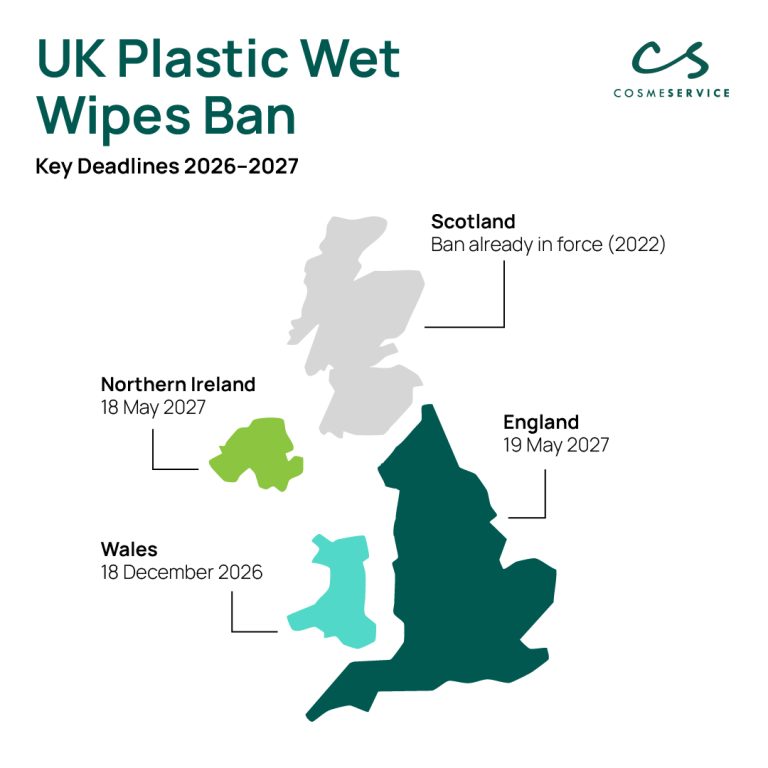
The UK plastic wet wipes restriction is being implemented on different dates across the nations. If you sell wipes in more than one part of the UK, you need to plan for the earliest applicable date and treat May 2027 as the point where the UK market becomes fully aligned.
- Scotland: In force since 2022
- Wales: Enters into force on 18 December 2026
- Northern Ireland: Enters into force on 18 May 2027
- England: Enters into force on 19 May 2027
Practical implication: brands should aim to finalise substrate changes, updated specifications and claims review well ahead of December 2026, then apply the same compliant version across all UK channels to avoid split inventory and labelling complexity.
Compliance risks for brands selling wipes in the UK
Brands must verify whether their wipe substrates contain plastic fibres and document material composition. Where plastic is present, alternative substrates such as cellulose based materials must be technically assessed and validated.
Environmental claims such as biodegradable, plastic free or flushable must be aligned with UK consumer protection requirements and supported by robust technical evidence.
Any change in substrate composition may also require updates to technical documentation, product descriptions and sustainability messaging.
Enforcement and penalties under the wet wipes ban
Local authorities will be responsible for enforcing the ban once it takes effect in each nation. Inspectors have the power to visit shops and stores, carry out test purchases, speak to staff, and request records to verify compliance. Businesses found in breach of the restriction can be fined and may also be required to cover the cost of the investigation.
Who is exempt from the UK plastic wet wipes ban
The restriction is aimed at consumer sales, so certain uses remain permitted:
- Medical use: wet wipes containing plastic can still be used and supplied by healthcare professionals for medical purposes.
- Pharmacies: registered pharmacies may sell them, but only to customers who specifically request them – they must not be displayed or advertised in store.
- Business-to-business supply: wholesalers and manufacturers can continue to sell and supply these wipes to businesses, charities and public sector organisations, provided they are not resold to individual consumers (except by registered pharmacies).
- Reusable wipes: wipes that can be safely reused multiple times fall outside the scope of the ban.
For B2B distributors and wholesalers, this distinction is critical: supply chains that stop at business customers are treated differently from those reaching individual consumers directly.
How Cosmeservice supports your UK compliance strategy
At Cosmeservice, we support cosmetic brands with UK regulation and international compliance planning.
In relation to the UK wet wipes ban, we assist with regulatory risk analysis, environmental claims verification and coordination with manufacturers to ensure lawful and stable market access.
If your brand commercialises wipes or single use substrates in the United Kingdom, this is the appropriate moment to assess your regulatory position. For support, contact info@cosmeservice.com
FAQs
When does the plastic wet wipes ban start in England?
The ban on selling wet wipes containing plastic comes into force in England on 19 May 2027, the last of the four UK nations to apply the restriction.
Is the plastic wet wipes ban already in force anywhere in the UK?
Yes. Scotland has enforced its ban since 2022. Wales follows on 18 December 2026, and Northern Ireland and England both apply their bans in May 2027.
Do cosmetic sheet masks fall under the UK wet wipes ban?
Yes. Sheet masks using plastic based substrates are explicitly listed among the products potentially affected by the restriction, alongside facial cleansing wipes, make-up remover wipes, and baby wipes.
Are ‘flushable’ wet wipes exempt from the ban?
No. Products described as flushable may still fall within scope of the ban if plastic content is present in the wipe structure, regardless of how they are marketed.
What should a brand selling wipes across all four UK nations do?
Brands should plan for the earliest applicable date (Wales, 18 December 2026) and finalise substrate changes, specifications, and claims review ahead of that date, then apply the same compliant version across all UK channels to avoid split inventory and labelling complexity.


